
Not Self Storage
Your team does not need to hire vans, visit a unit, search through stacks, or manage another facility.
Secure managed archive storage for business records, document boxes, legal files, financial records, project archives, and retained paperwork.
KXH manages the physical archive lifecycle from collection and secure transport to organisation, warehouse storage, retrieval, and return delivery. Your team does not need to rent, visit, or operate a self-storage unit.
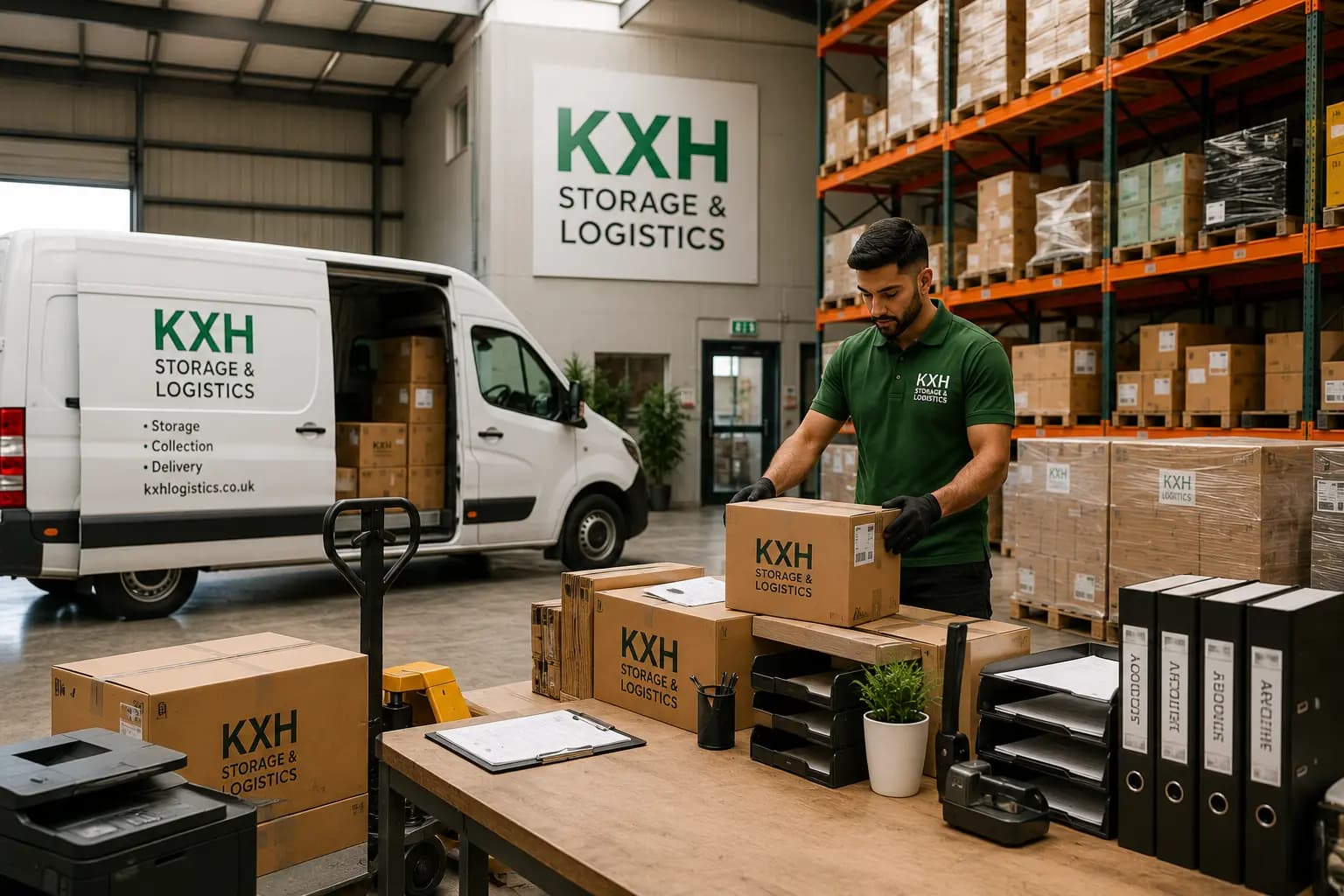
Managed Physical Archive Storage
KXH manages the physical movement and organisation of business archives without presenting the service as self storage, cloud storage, or records-management software.
Your team does not need to hire vans, visit a unit, search through stacks, or manage another facility.
KXH stores physical archive boxes, files, plans, drawings, and bound records rather than digital documents.
The service is built around real warehouse handling, physical references, retrieval requests, and return delivery.
KXH collects, organises, stores, retrieves, returns, and can coordinate authorised shredding at retention end.
Planning a Successful Archive Project
Archive projects work best when the business decides what will be stored, how boxes should be identified, who can request retrieval, and what should happen when records reach their review date.
KXH provides the physical collection, organisation, warehouse storage, retrieval and return-delivery workflow. Your organisation remains responsible for document ownership, retention decisions, access approval and destruction authorisation.
Problems We Solve
Free working space, improve physical records organisation, and keep retained documents available without asking employees to manage transport, unit access, shelving, or repeated archive searches.
Move inactive records and archive boxes out of offices, corridors, meeting rooms, basements, and valuable operational space.
Keep records for required business, legal, financial, contractual, or governance periods without overcrowding your premises.
Replace mixed stacks, unclear labels, and scattered storage areas with a structured physical archive inventory and agreed references.
Transfer retained documents offsite before an office relocation, refurbishment, consolidation, or reduction in occupied space.
Store documents away from daily operations while retaining a practical process for requesting selected boxes or files.
Avoid arranging vans, loading boxes, visiting a unit, searching through stacks, and transporting records back to your office.
Consolidate records from departments, branches, former offices, project sites, or multiple storage locations into one managed service.
Keep sensitive business records within a managed warehouse workflow rather than in open office areas or uncontrolled cupboards.
How It Works
A practical managed process covering archive collection, physical organisation, offsite storage, retrieval and return delivery.
Tell us what you need to store, the approximate archive volume, collection address, expected storage term, and likely retrieval requirements.
We collect boxed archives from the agreed London premises and organise them using suitable labels, references, categories, or supplied manifests.
Your physical records are placed into managed warehouse storage, freeing office space while keeping the archive available for future requests.
Request selected boxes or a full archive for delivery to an agreed address, with re-storage available when included in your arrangement.
After Collection
The post-collection workflow turns transported boxes into an organised physical archive that can support later retrieval and return delivery.
Collected archive boxes enter the agreed warehouse workflow and are checked against the collection information provided.
Existing labels, box numbers, department references, manifests, or agreed identifiers are confirmed for physical organisation.
Archives are placed into an organised warehouse location so stored boxes can be distinguished and requested later.
The agreed archive references support future requests for selected boxes, document groups, projects, or a complete archive.
Archive Lifecycle
KXH supports the physical stages that follow active office use: collection, organisation, offsite storage, retrieval, return, re-storage, and authorised end-of-retention handling.
Documents begin as active working records used by teams, clients, projects, finance, HR, governance, or operations.
Once records become inactive or space is needed, KXH can collect boxed archives from the agreed London premises.
Archive boxes are arranged using agreed box references, departments, projects, date ranges, retention labels, or supplied manifests.
Physical records are moved into managed warehouse storage, freeing office space while keeping the archive available for future requests.
Selected boxes or identified records can be requested for audits, legal work, projects, HR reviews, finance checks, or operational use.
Retrieved archives can be delivered to the agreed address and returned to storage after use when this is part of the service.
At the end of an organisation's approved retention period, records may be returned, retained longer, reviewed, or securely shredded with authorisation.
Flexible Archive Storage Pricing
Archive storage is not priced as a one-size-fits-all room. Your quote reflects the physical volume stored and the work required to collect, handle, organise, retain, retrieve, and return your business records.
This makes the service suitable for anything from a defined office-clearance archive project to an ongoing offsite records requirement with scheduled additions and retrieval requests.
No fixed prices are published because access, box condition, volume, indexing, storage term, retrieval frequency, and delivery requirements vary between organisations.
Calculate Your Archive Storage QuoteThe number, dimensions, weight, and condition of archive boxes, bound records, plans, tubes, or other approved document containers.
The expected retention period, whether temporary, project-based, rolling, multi-year, or subject to future review.
Collection location, access conditions, stairs or lifts, loading requirements, packing status, and handling needed before storage.
The likely frequency, urgency, quantity, destination, and handling requirements for archive retrieval and return delivery requests.
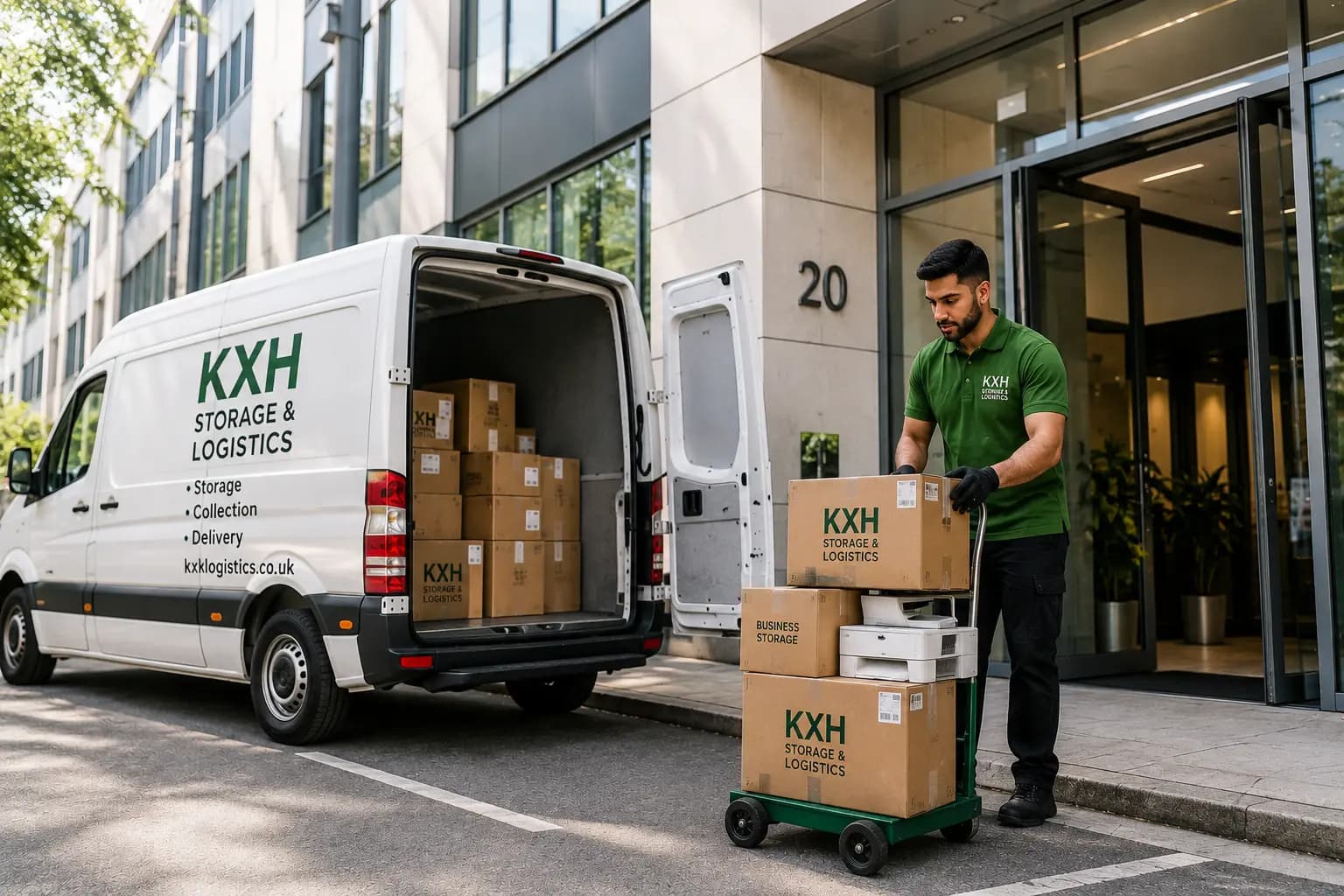
Managed Archive Storage
KXH stores real archive boxes, paper documents, bound records, plans, drawings, and approved business files. This is a physical warehouse service, not electronic document management, scanning software, or a digital records platform.
We collect archives from your premises, place them into an organised warehouse workflow, maintain agreed physical archive references, retrieve requested records, and coordinate return delivery.
The managed model is designed for businesses that need offsite capacity and practical access support but do not want employees travelling to a self-storage site or managing an additional facility. Businesses needing wider commercial capacity can also explore Business Storage London and Warehouse Storage London.
Archive Security & Suitability
Sensitive business archives need a storage workflow that reflects the documents, packaging, access controls and retrieval expectations involved. KXH reviews these requirements during quotation rather than applying unsupported one-size-fits-all claims.
Boxes and document containers should be suitable for transport, handling and the proposed storage period.
Tell KXH about internal access restrictions, authorisation processes and sector-specific handling expectations.
Clear box numbers, manifests or agreed identifiers make later retrieval more practical and reliable.
Your organisation remains responsible for deciding what must be retained, returned, reviewed or destroyed.
Preparing Archives for Collection
You do not need a perfect archive before requesting a quote, but a few practical preparation steps can reduce handling issues and improve future retrieval.
Unsure how organised the archive needs to be? An estimate and a description of the current condition are enough to begin the quotation discussion.
What Can Be Stored
KXH supports a broad range of boxed and appropriately packaged business archives, subject to suitability, condition, confidentiality requirements, and available warehouse capacity.
Industries We Support
Different industries retain different documents, use different reference systems, and require different retrieval workflows. KXH shapes the physical storage plan around the records you hold and how your teams expect to use them.
Closed matter files, contracts, case documentation, property records, correspondence, and retained legal archives.
Client files, tax records, working papers, payroll documentation, accounts, invoices, and historical financial records.
Approved medical, care, administrative, governance, finance, supplier, and operational records requiring managed physical storage.
Administrative files, student-related records, finance documents, governance papers, estates records, and historical archives.
Tenancy records, leases, inspections, maintenance histories, contractor documents, compliance files, and property archives.
Project files, drawings, handover packs, site documentation, contracts, certificates, manuals, and completed-project archives.
Technical drawings, project records, reports, specifications, manuals, calculations, and historical design documentation.
Client documentation, transaction records, audit materials, agreements, governance files, and retained business records.
Property files, supplier records, HR archives, finance paperwork, operating manuals, and records from multiple locations.
Governance records, donor administration, programme files, finance documentation, grant records, and historical organisational archives.
Project documentation, contracts, reporting records, supplier files, compliance evidence, and retained operational archives.
Plans, drawings, specifications, project files, planning documents, client records, samples documentation, and completed-job archives.
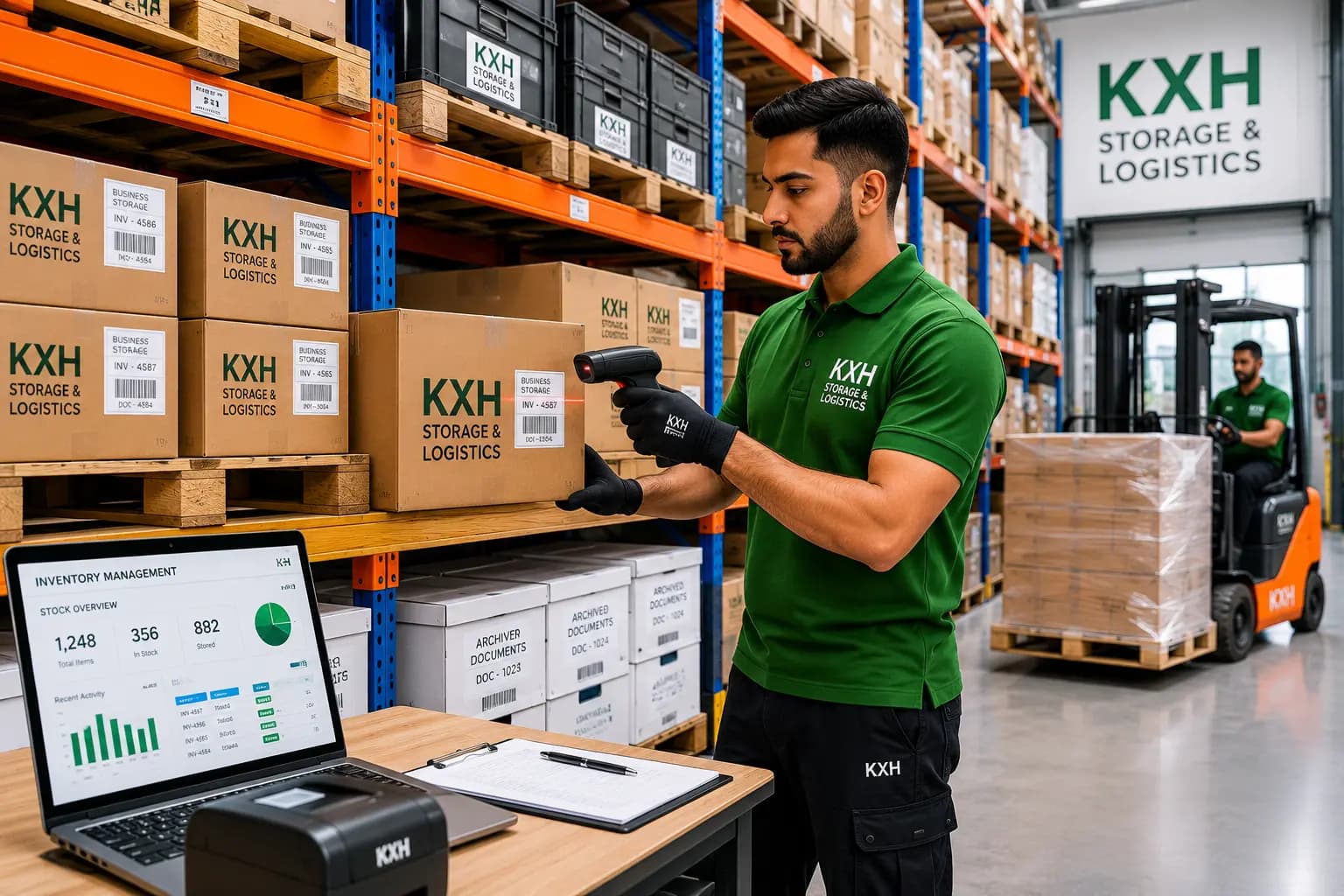
Archive Use Cases
Archive storage can solve an immediate space problem, support a relocation, or become an ongoing records process for inactive documents that still need to be retained and retrieved.
Move inactive files off desks, shelves, cupboards, corridors, and filing rooms while keeping active documents onsite.
Create room for more employees, equipment, customer areas, production, or operational activity without losing retained records.
Reduce the space allocated to filing and move older records into managed offsite archive storage.
Support internal retention policies by storing physical records for agreed periods and organising them for future review.
Hold records that are rarely used but still need to remain available for legal, contractual, historical, or business reasons.
Separate closed files from active working documents so teams can access current information more efficiently.
Bring records together from departments, former branches, home offices, project sites, or several existing storage locations.
Remove retained records before relocation day and return selected archives once the new office is ready.
Choose the Right Archive Model
The right model depends on archive volume, governance requirements, retrieval frequency and the level of operational support your organisation needs. KXH provides a practical managed option built around collection, organised storage, retrieval and delivery.
Self storage
Your team packs, loads, transports, and unloads the archives
Traditional archive company
Collection may be available within a fixed archive programme
KXH managed archive storage
✓ KXH can collect archive boxes from London business premises
Self storage
Your team creates and maintains all box lists and locations
Traditional archive company
Formal barcode or records-management systems may be required
KXH managed archive storage
✓ Physical archive records can be organised around agreed labels, manifests, and references
Self storage
Your staff visit the unit and search for the required box
Traditional archive company
Retrieval follows the provider's contracted process and service level
KXH managed archive storage
✓ Request selected boxes or identified archives for managed retrieval
Self storage
You rent and manage access to a storage unit
Traditional archive company
Purpose-built records facility with standardised archive services
KXH managed archive storage
✓ Archives are stored inside KXH's managed business warehouse environment
Self storage
Your team arranges vehicles and returns documents
Traditional archive company
Delivery may be scheduled under the provider's service terms
KXH managed archive storage
✓ Return delivery can be coordinated to the agreed London address
Self storage
All lifting, sorting, labelling, and movement is your responsibility
Traditional archive company
Structured handling designed for high-volume records contracts
KXH managed archive storage
✓ Collection, physical organisation, storage handling, retrieval, and return can be managed together
Self storage
Flexible unit rental but high internal labour and travel
Traditional archive company
Often suited to larger formal records-management programmes
KXH managed archive storage
✓ Suitable for businesses needing practical managed storage without operating their own unit
Self storage
Space only
Traditional archive company
Specialist archive and records-management service
KXH managed archive storage
✓ Integrated with business storage, inventory organisation, relocation, and document shredding services
Managed Business Archive Partner
KXH combines archive collection, physical organisation, warehouse storage, retrieval, and delivery with wider business-storage and relocation capabilities. That makes it easier to manage records alongside the other physical items your organisation needs to move or store.
We can collect archive boxes from offices and business premises, reducing disruption and removing the need to arrange your own transport.
Physical archives are stored within a professionally managed business-storage environment rather than an unattended office cupboard or customer-managed unit.
Boxes can be structured around agreed references, departments, date ranges, projects, clients, retention categories, or supplied manifests.
Request selected archives instead of collecting the entire stored load whenever a team needs a specific box, file group, or project record.
Retrieved archives can be delivered to an agreed address, helping teams access records without repeated warehouse visits.
Archive storage can form part of a wider solution covering office equipment, commercial goods, relocation support, inventory organisation, and secure shredding.
From the first collection through long-term storage, selected retrieval, office delivery, re-storage, or authorised shredding, KXH gives businesses one operational partner for the physical archive lifecycle. Records approved for destruction can move into our Document Shredding service.
Common Archive Problems
Moving archive boxes offsite only solves the space problem if the records remain identifiable. Poor labels, inconsistent references and missing ownership information make future retrieval slower and more difficult.
KXH can work around agreed physical references and manifests so the archive-storage process remains connected to the way your business identifies records.
Archive Inventory Organisation
Archive organisation focuses on physical records: boxes, files, plans, registers, and document groups held inside the warehouse. Agreed identifiers help distinguish one stored archive from another and support more efficient retrieval requests.
The right structure may use box numbers, departments, projects, client references, year ranges, record categories, retention dates, or a manifest supplied by your organisation. The service does not replace your legal records policy or digital document system.
A useful archive inventory should make future action easier. Before collection, decide how teams will identify a requested record, who may authorise retrieval, where deliveries should go, and what should happen when records reach their review date.
Existing Archive Systems
Businesses often already have box labels, spreadsheets, department codes, project numbers or retention dates. Where suitable, these references can form the starting point for the physical archive organisation agreed with KXH.
KXH does not replace your records-management policy or internal system. The goal is to connect your existing identifiers with the physical boxes held in warehouse storage.
Archive Retention Support
Retention periods vary by record type, sector, contract, internal policy, and legal responsibility. KXH does not determine how long your organisation must keep a document, but we can structure physical storage around the review dates and categories you provide.
Archive labels and manifests can include retention dates or review categories so your team can identify records that need continued storage, return, review, or authorised destruction.
These are examples of archive arrangements, not legal retention advice. Your organisation remains responsible for setting and approving its own retention schedule.
Archive Retrieval Service
Retrieval is a core part of the managed service. Where archives are stored under suitable references, your team can request particular boxes, project files, departmental records, date ranges, or a complete stored archive.
Timing depends on the quality of the archive references, the number of records requested, warehouse handling, delivery location, and scheduling availability. Frequent or time-sensitive retrieval requirements should be agreed during quotation.
Typical Retrieval Requests
Archive retrieval may involve one labelled box, several project files, a department archive or the complete stored collection. Clear references help identify the requested records.
Prepare Your Archive Quote
A clear archive-storage quote depends on more than box count. Collection access, existing organisation, retention expectations, handling and retrieval requirements all affect the proposed workflow.
Estimates are still useful when exact figures are unavailable. KXH can discuss the practical next steps before collection is scheduled.
Request an Archive Storage QuoteKXH is designed for organisations that want a managed physical archive service with collection, organisation, offsite storage, retrieval, and return delivery rather than unrestricted self-storage access.
London Coverage
KXH supports archive collection, managed warehouse storage, physical inventory organisation, retrieval, and return delivery for businesses across Greater London. We work with offices, professional practices, schools, project sites, retail groups, charities, and other organisations holding retained records.
Managed business and archive storage with collection, physical organisation, retrieval, and return delivery.
Learn more →Managed business and archive storage with collection, physical organisation, retrieval, and return delivery.
Learn more →Managed business and archive storage with collection, physical organisation, retrieval, and return delivery.
Learn more →Managed business and archive storage with collection, physical organisation, retrieval, and return delivery.
Learn more →Managed business and archive storage with collection, physical organisation, retrieval, and return delivery.
Learn more →Managed business and archive storage with collection, physical organisation, retrieval, and return delivery.
Learn more →Explore business-storage coverage throughout Greater London.
Connect archive storage with broader warehouse capacity, physical inventory organisation, office moves, temporary storage, and secure document disposal.
The main KXH business-storage service for archives, stock, equipment, office contents, collection, warehouse storage, and return delivery.
Learn more →Flexible managed storage for commercial records, equipment, stock, furniture, materials, and operational items.
Learn more →Physical inventory organisation, item records, categorisation, warehouse handling, and selected-item return support.
Learn more →Managed warehouse capacity for business records, stock, equipment, pallets, and commercial storage requirements.
Learn more →Secure document shredding for records that have reached the end of their approved retention period.
Learn more →Business moving support for offices relocating, consolidating, refurbishing, or changing how their workspace is used.
Learn more →Combined collection, moving, temporary storage, handling, and return delivery for London businesses.
Learn more →

Danhua Zhu
Feb 20, 2026
This is my fourth time using this service, and I truly appreciate the consistent support and value it provides. It genuinely means a lot to me.

Yadi Gao
Feb 1, 2026
Excellent moving service! The team arrived on time, worked efficiently, and handled all my furniture and goods with great care. Everything was well protected and nothing was damaged during the move. Highly recommended.

Li Wenky
Dec 9, 2025
I’ve used Keli for every move in the past few years and he’s honestly the most professional and responsible mover I’ve ever met. The whole process is super simple and straightforward.

Kai C
Jul 1, 2024
After moving home three times with Keli’s help, I can confidently say he is the best ever. Always responsible, efficient, easy to communicate with, and incredibly patient.
Plan Your Archive Storage Project
Share an estimated box count, collection postcode, storage duration and likely retrieval requirements. KXH will use that information to scope a practical managed archive-storage workflow.
Not sure how many boxes you have? An estimate is enough to start.
KXH provides managed physical archive storage inside a business warehouse environment. Security, access, collection, handling, indexing, retrieval, and delivery requirements should be discussed during quotation so the proposed service matches the confidentiality and operational needs of your records.
Yes. KXH can arrange archive collection from offices, commercial premises, project sites, former business locations, and other agreed addresses across London. Collection requirements are priced according to volume, access, location, handling, and transport needs.
KXH can arrange retrieval of selected archive boxes or identified records where the archive has been organised with suitable references. The practical retrieval method depends on the indexing information, labels, manifests, and level of document identification agreed for your service.
Yes, subject to suitability and agreed handling requirements. Legal archives may include closed matter files, contracts, property records, correspondence, case documents, and other retained business records.
KXH can discuss storage of approved physical medical, care, administrative, and healthcare records. The organisation must explain applicable confidentiality, retention, access, and handling requirements so suitability can be assessed before collection.
Yes. Our managed model is designed to reduce the need for businesses to visit a storage unit. We can collect boxed archives from the office, transport them to storage, organise them using agreed references, and arrange retrieval and delivery later.
Archive storage can support temporary, medium-term, rolling, or long-term requirements. The appropriate arrangement depends on archive volume, retention policy, review dates, retrieval frequency, and any planned destruction or return programme.
Boxes may be organised using existing labels, box numbers, departments, date ranges, client or project references, retention categories, manifests, or another agreed physical archive structure. KXH is not cloud storage or document-management software; the service concerns real boxes and records held in the warehouse.
Yes. Selected archives or a full stored collection can be returned to an agreed address. Delivery timing, volume, handling, access, and any re-storage requirement are confirmed before the movement is scheduled.
Retrieval speed depends on how the archive is indexed, the quantity requested, warehouse handling requirements, delivery location, and scheduling availability. Businesses with frequent or time-sensitive retrieval needs should explain those expectations during quotation.
No. Self storage generally provides a unit that your team must transport records to, organise, visit, and manage. KXH provides a managed archive workflow that can include collection, transport, organisation, warehouse storage, retrieval, and return delivery.
No. KXH stores physical archive boxes, paper files, bound records, drawings, plans, and approved business documentation. We do not present this service as cloud storage, scanning software, electronic records management, or a digital document platform.
KXH can discuss confidential document storage where the records, packaging, indexing, handling, access, and retrieval requirements are suitable for the service. Businesses remain responsible for explaining any sector-specific, contractual, legal, or internal controls that apply.
Yes. Archive collection can be coordinated before an office move, consolidation, refurbishment, or downsizing project. Inactive records can remain offsite while active files, furniture, and equipment move to the new workplace.
You can request return, continued storage, review, or an agreed shredding service for eligible records. Destruction should only proceed with clear authorisation from the organisation responsible for the documents and in line with its retention policy.
Not always. Existing box lists, labels, manifests, departments, project references or date ranges are useful, but the required level of organisation can be discussed during quotation. Retrieval is easier when each box or record group has a clear agreed identifier.
Multiple collection points can be discussed as part of an archive consolidation or office-relocation project. Pricing and scheduling depend on the number of locations, archive volume, access, handling and transport requirements.
Ongoing additions may be possible where they fit the agreed storage and inventory process. Tell KXH how frequently new boxes are likely to be added so collection, labelling, storage records and pricing can be planned appropriately.